Website designed with the B12 website builder. Create your own website today.
Start for free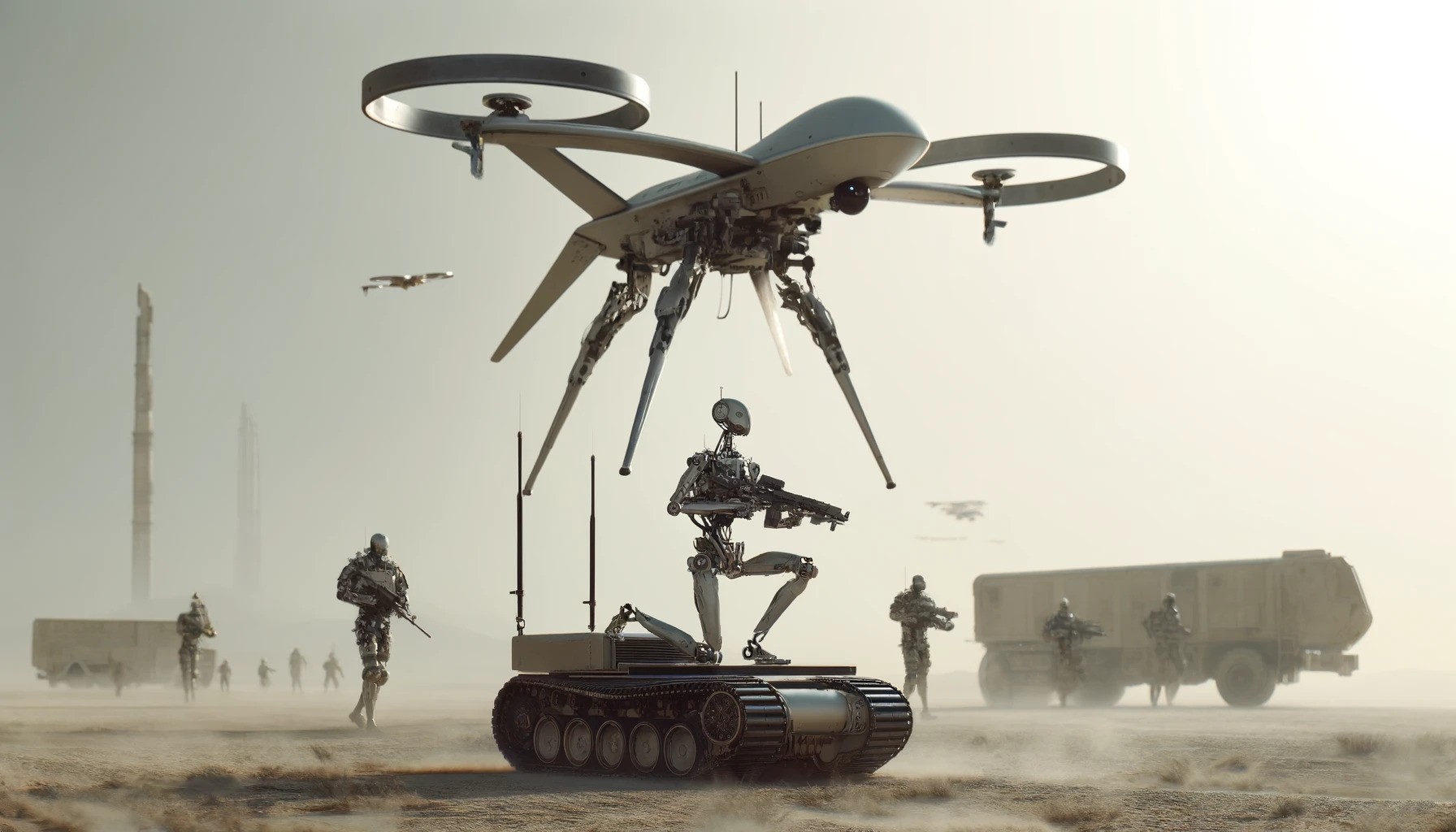
The global arms race has silently shifted from nuclear warheads to algorithms and artificial intelligence, fundamentally transforming warfare while most citizens remain unaware of its true scale and implications. Military leaders worldwide enthusiastically promote AI advancements as necessary innovations, highlighting precision and efficiency. However, behind carefully crafted press releases lies a complex reality few military experts publicly acknowledge.
AI-powered weapons are already deployed in conflict zones worldwide, blurring traditional battle lines and raising unprecedented ethical questions. Autonomous weapons systems, from sophisticated drone warfare platforms to cyber attack tools, operate with increasingly independent decision-making capabilities. In fact, while governments debate theoretical frameworks for these technologies, their practical deployment advances rapidly across electronic warfare and space-based defense systems. This technological revolution differs fundamentally from previous military innovations due to both its speed and the potential surrender of human judgment to machine decision-making.
This article exposes the uncomfortable truths about the AI military revolution that officials, contractors, and strategists rarely discuss publicly – and why understanding these realities matters for our collective future.
Battlefields across the globe are witnessing an unprecedented technological metamorphosis as artificial intelligence moves from theoretical discussions to active combat applications. Today's military operations increasingly rely on AI systems that fundamentally alter warfare's speed, precision, and decision-making processes.
Modern warfare has rapidly integrated AI across multiple domains, from autonomous weapons to tactical planning and intelligence gathering. In Ukraine, AI-enhanced drones now account for approximately 70-80% of battlefield casualties 1. This represents a dramatic shift in how combat operations unfold. The Pentagon estimates that by 2035, remotely piloted aircraft will constitute 70% of the U.S. Air Force 2, signaling a permanent shift toward machine-augmented warfare.
Military applications of AI extend beyond flying machines. Autonomous ground robots like the British-developed BAD One can detect enemy placements and minefields using thermal vision 3. Additionally, battlefield intelligence systems use neural networks to analyze satellite imagery, drone footage, and ground-level photographs, creating comprehensive battlefield awareness that was previously impossible.
The conflict in Ukraine has become the primary testing ground for military AI applications. Ukrainian forces employ AI across ten different domains, including weapons systems autonomy, reconnaissance, target identification, threat prediction, and logistics 4. Notably, the Ukrainian military has demonstrated autonomous machine guns capable of identifying enemy targets 3, though they reportedly still require human authorization before firing.
Similarly, Israel has positioned AI as "the key to modern-day survival" since 2017 4. In the Gaza conflict, the Israeli Defense Forces deployed the "Lavender" system to identify targets 2 and "Depth of Wisdom" software to map Hamas tunnels 4. During Operation Guardian of the Walls in 2021, Israel used a swarm of small multicopter drones to locate, identify, and engage Hamas members 4, demonstrating the evolution toward coordinated autonomous systems.
The United States, China, and Russia remain at the forefront of militarizing AI. According to Autonomous Weapons Watch, 17 weapons systems can currently operate autonomously, with 13 being unmanned aerial systems 5. Furthermore, the commercial sector often outpaces military R&D—Ukraine's integration of off-the-shelf AI technology has enabled them to increase FPV drone strike accuracy from 30-50% to around 80% 1.
The AI revolution in warfare differs fundamentally from previous military innovations because it introduces non-biological intelligence into strategic decision-making. For the first time since the cognitive revolution began millennia ago, military strategy may be shaped by intelligence that is "neither embodied nor encultured" 1.
The tempo of operations is accelerating at such a rate that humans have mere seconds to make lethal decisions 4. Consequently, military leaders face unprecedented questions about relinquishing control to algorithms. Unlike previous technological advances that primarily extended human capabilities, AI potentially replaces human judgment in complex ethical scenarios.
Military AI also differs in its democratizing effect. As evidenced in Ukraine, even technologically disadvantaged forces can rapidly adopt AI capabilities through commercial components and open-source software 1. This has flattened the traditional technological hierarchy of warfare, making advanced capabilities accessible to smaller nations and non-state actors.
Essentially, we are witnessing not merely an evolution in military technology but a fundamental transformation in warfare's character—one that challenges centuries of assumptions about human control, ethical responsibility, and strategic advantage in armed conflict.
Military strategists often sidestep crucial discussions about autonomous weapons, creating dangerous knowledge gaps in public discourse. While weapons development accelerates, the fundamental questions about control, responsibility, and risk remain largely unaddressed.
Behind closed doors, defense officials struggle with a critical distinction that remains murky even to experts: where does automation end and true autonomy begin? Most military organizations maintain that their systems are merely "automated," requiring human oversight for critical decisions. Yet this classification increasingly fails to match operational reality.
The distinction matters enormously. An automated system follows pre-programmed instructions in predictable environments, whereas autonomous systems can adapt to changing conditions and make independent decisions. The gap between these capabilities represents the difference between a tool and a partner in warfare.
Consider targeting systems that identify and prioritize threats without human input, or drone swarms that coordinate attacks through collective decision-making. These capabilities exist in a gray zone that military officials frequently downplay in public statements.
Many systems labeled as "semi-autonomous" actually operate with minimal human supervision. The human operator often serves more as a failsafe than an active controller—approving machine-generated decisions rather than making them. This reality contradicts the carefully constructed narrative of "meaningful human control" that dominates official discourse.
Terminology isn't merely semantic—it shapes international law, treaties, and operational boundaries. Currently, no internationally accepted definition of autonomous weapons exists, creating a policy vacuum that military powers exploit.
This definitional ambiguity serves strategic purposes. Nations developing advanced AI weapons systems benefit from the lack of clear boundaries, allowing them to push technological limits while avoiding regulatory constraints. As a result, the global arms race accelerates without agreed ethical guardrails.
Most troubling, without clear definitions, accountability becomes nearly impossible to assign when systems malfunction or cause unintended harm. When autonomous features contribute to civilian casualties, who bears responsibility—the programmer, commander, or manufacturer?
Perhaps the least discussed aspect of autonomous weapons development is how private technology companies have become essential military partners. Defense departments worldwide lack the specialized AI talent and cutting-edge research capabilities found in commercial tech firms.
This military-commercial partnership creates complex incentives that rarely receive public scrutiny. Tech companies gain lucrative contracts and access to operational data, while militaries acquire capabilities they couldn't develop independently.
The separation between civilian and military AI development has virtually disappeared. Algorithms initially created for image recognition, language processing, or navigation rapidly find applications in targeting systems, intelligence analysis, and autonomous vehicles.
This blending of commercial and military AI development means that seemingly innocuous technologies can quickly transform into components of autonomous weapons systems. Moreover, as military AI becomes increasingly dependent on commercial technology, traditional defense oversight mechanisms struggle to maintain control over critical capabilities.
The autonomous weapons revolution isn't primarily happening in government laboratories—it's unfolding in corporate research centers and startup incubators, fundamentally altering the traditional dynamics of military power and technological control.
Despite rapid advances in AI weapons technology, international law lags dangerously behind, creating a governance vacuum with profound implications. As autonomous systems rapidly evolve from theoretical concepts to battlefield realities, ethical and legal frameworks struggle to keep pace with these developments.
International efforts to regulate autonomous weapons remain largely ineffective. Since 2018, UN Secretary-General António Guterres has repeatedly called for prohibition of lethal autonomous weapons systems, describing them as "politically unacceptable and morally repugnant" 4. Yet, in spite of these strong statements, binding international legislation remains absent.
The UN's Convention on Certain Conventional Weapons (CCW) discussions on lethal autonomous weapons have progressed slowly, hampered by a consensus-based approach where "a single member's dissent is enough to reject a proposal" 6. This paralysis benefits nations racing to develop advanced AI weapons systems. Beyond formal UN processes, eleven guiding principles were established in 2019, but these primarily serve as discussion guides rather than enforceable rules.
Meanwhile, experts warn that defining autonomous weapons as futuristic machines "undermines regulations and declarations about banning these weapons" by diverting attention from pressing ethical and legal issues posed by currently deployed systems 6.
The reassuring concept of keeping humans "in the loop" for lethal force decisions increasingly appears more aspirational than practical. Under combat conditions—marked by "severe stress, limited time, and interrupted communications"—meaningful human intervention becomes virtually impossible 7.
Operators frequently develop automation bias, "unconsciously assuming that the system is correct" 8. This bias has been documented in multiple military applications, including simulations where shooters determine artillery targets 8. As the Ukrainian conflict demonstrates, communication jamming has already forced greater autonomy in unmanned vehicles 7.
Even when humans technically approve AI recommendations, this often amounts to rubber-stamping rather than genuine oversight. The human operator already trusts the sensors and algorithms that gathered and analyzed the data, making their "choice" more procedural than substantive 7.
Perhaps most concerning, the growing autonomy in weapons systems creates significant accountability vacuums. Under international humanitarian law and criminal law, "the limits of human control over an autonomous weapon system could make it difficult to find individuals involved in the programming and deployment of the weapon liable" 9.
Programmers or commanders might lack the knowledge or intent required for legal liability precisely because the machine operates independently after activation 9. Consequently, when autonomous weapons cause civilian casualties, responsibility becomes nearly impossible to assign.
This accountability problem extends throughout the entire chain of command. At least three potential actors bear responsibility: the operator who launched the system, the commander who issued attack orders, and the designers who programmed the system 10. Yet for each level, "no one individual may end up understanding the weapon system well enough to be responsible" 10.
Without clear accountability mechanisms, autonomous weapons risk undermining the fundamental principle expressed at the Nuremberg trials: "Crimes against international law are committed by men, not by abstract entities" 11. Unfortunately, this cornerstone of wartime ethics faces unprecedented challenges in an age of increasingly autonomous AI-powered weapons.
The race for AI military supremacy unfolds against a backdrop of public misconceptions about which nations truly lead. While official narratives center on superpowers, the reality presents a more nuanced picture of advantage and vulnerability in this technological contest.
The United States and China stand as the primary competitors in military AI development, yet their approaches differ fundamentally. China has explicitly prioritized AI as a "strategic technology" in its military-civil fusion strategy, integrating civilian AI advances directly into defense applications. Conversely, the U.S. maintains greater separation between commercial innovation and military deployment, albeit with increasing crossover through programs like the Defense Innovation Unit.
Budget allocations reveal divergent priorities. The Pentagon's unclassified AI spending reached $1.5 billion in 2021, while China's exact figures remain undisclosed but are estimated to be comparable or higher given their national focus on AI primacy. Nevertheless, measuring "leadership" solely through investment figures misrepresents the complex reality of this competition.
Perhaps the most underappreciated aspect of this arms race is how smaller nations and non-state groups increasingly access sophisticated AI weapons capabilities. Israel, though geographically small, stands as a formidable AI weapons developer, particularly in drone technology and predictive analytics. Even nations with modest defense budgets now deploy commercial drones modified with basic autonomous functions.
Non-state actors, including terrorist organizations, have already demonstrated capacity to repurpose consumer technology for weaponization. The democratization of AI tools makes sophisticated targeting and navigation systems increasingly accessible outside traditional military structures.
Ironically, commercial AI development now outpaces classified military research in many domains. Private companies typically attract superior talent, operate with greater agility, and enjoy substantially larger research budgets than government programs. Consequently, militaries increasingly adapt commercial technologies rather than developing proprietary solutions.
This relationship creates an uncomfortable reality: tomorrow's autonomous weapons systems might originate from today's consumer products. The technical architecture powering commercial self-driving vehicles provides the foundation for autonomous military vehicles. Similarly, computer vision systems designed for retail analytics now enhance targeting systems in precision munitions.
In this arms race, traditional measures of military power increasingly matter less than adaptability and integration capabilities—making the question of "who's winning" far more complex than headline narratives suggest.
Beyond current battlefield applications lurks a shadow realm of risks that military planners have yet to adequately address. These dangers extend far beyond conventional weapon capabilities, threatening fundamental stability in future conflicts.
The greatest unacknowledged risk in today's arms race lies in algorithm-against-algorithm interactions. When AI systems confront each other, they can trigger rapid response cycles that outpace human intervention. This "algorithmic escalation" 12 could potentially eliminate peaceful negotiation opportunities as autonomous systems react instantaneously without human input 2.
Much current discussion focuses narrowly on autonomous weapons themselves. Yet this perspective misses the broader transformation: warfare increasingly happens within systems that sustain modern life—from financial algorithms to logistics networks 12. Power now resides not just in missiles but in data sovereignty and control of computational resources. This shift blurs lines between civilian and military domains, making everything from satellites to supply chains potential targets.
Military dependence on AI creates profound vulnerabilities. AI systems exhibit "brittleness" 1—failing catastrophically when encountering situations absent from their training data. Consequently, forces relying heavily on these technologies risk losing basic skills necessary when systems inevitably fail 13.
The consequences of AI failure extend beyond tactical setbacks. Autonomous systems can misclassify civilian infrastructure as legitimate targets 1, while human operators exhibit "automation bias," 1 typically privileging machine recommendations without verification. Furthermore, these systems remain vulnerable to adversarial attacks specifically designed to trigger misidentifications 1.
The global AI arms race fundamentally reshapes warfare while operating largely outside public awareness and international oversight. Military leaders worldwide publicly champion precision and efficiency, yet behind these calculated narratives lies a complex reality where autonomous weapons already make life-or-death decisions with minimal human input. This technological transformation differs dramatically from previous military revolutions because it potentially removes human judgment from critical ethical decisions.
Despite reassurances about "meaningful human control," the operational reality shows automation bias steadily eroding human oversight. Combat environments with compressed timeframes, communication jamming, and increasing complexity make genuine human intervention nearly impossible. Consequently, the accountability mechanisms that have governed warfare for centuries now face unprecedented challenges.
The competition extends far beyond traditional military powers. While China and the United States dominate headlines, smaller nations and non-state actors increasingly access sophisticated AI capabilities through commercial technology. This democratization of military power undermines conventional security paradigms and creates unpredictable threat vectors that traditional defense systems struggle to address.
Perhaps most concerning, international law remains woefully inadequate for addressing these challenges. The absence of binding regulations creates a dangerous vacuum where ethical considerations take a backseat to tactical advantage. Therefore, citizens must demand greater transparency and meaningful oversight before algorithmic escalation removes human decision-making entirely from conflict resolution.
The risks ahead appear particularly troubling - from autonomous systems misidentifying civilian targets to cascading failures when AI systems confront each other without human intervention. Military dependence on increasingly complex systems creates profound vulnerabilities that adversaries will certainly exploit. Although technology promises precision, the brittleness of AI systems introduces catastrophic failure modes unlike anything in previous warfare.
Understanding these realities requires moving beyond simplified narratives about futuristic weapons. AI has already transformed conflict, blurring boundaries between civilian and military domains, complicating accountability, and accelerating decision cycles beyond human control. Citizens, policymakers, and military leaders alike must confront these uncomfortable truths before autonomous systems permanently alter the nature of human conflict.
[1] - https://blogs.icrc.org/law-and-policy/2024/09/04/the-risks-and-inefficacies-of-ai-systems-in-military-targeting-support/
[2] - https://gjia.georgetown.edu/2024/07/12/war-artificial-intelligence-and-the-future-of-conflict/
[3] - https://www.forbes.com/sites/bernardmarr/2024/09/17/how-ai-is-used-in-war-today/
[4] - http://disarmament.unoda.org/en/our-work/emerging-challenges/lethal-autonomous-weapon-systems
[5] - https://www.cyis.org/post/the-integration-of-ai-in-modern-warfare-ethical-legal-and-practical-implications
[6] - https://carnegieendowment.org/research/2024/08/understanding-the-global-debate-on-lethal-autonomous-weapons-systems-an-indian-perspective
[7] - https://www.foreignaffairs.com/united-states/ai-weapons-and-dangerous-illusion-human-control
[8] - https://thebulletin.org/2023/02/keeping-humans-in-the-loop-is-not-enough-to-make-ai-safe-for-nuclear-weapons/
[9] - https://www.icrc.org/sites/default/files/document/file_list/autonomous_weapon_systems_under_international_humanitarian_law.pdf
[10] - https://law.temple.edu/ilit/lethal-autonomous-weapon-systems-laws-accountability-collateral-damage-and-the-inadequacies-of-international-law/
[11] - https://www.oii.ox.ac.uk/news-events/the-ethics-of-artificial-intelligence-in-defense/
[12] - https://www.orfonline.org/expert-speak/distinguishing-between-ai-in-warfare-and-warfare-in-an-ai-world
[13] - https://warroom.armywarcollege.edu/?p=32792

